Profiles and ads aren’t yours, your email list is. How to build it honestly and legally without annoying people.
Customers who have already trusted you are the easiest to win back. The problem is that after the first purchase you often have no way to remind them you exist. An email list solves exactly that, and it is yours: no algorithm decides who sees your email.
Why email and not only social media
On Facebook and Instagram, only a small share of your followers see your post unless you pay for ads. The rules change, profiles get blocked, and if the platform changes something tomorrow, you lose access to the people you’ve been collecting for years.
Email goes straight to the person’s inbox. You can move the list from one tool to another whenever you like. You don’t depend on anyone’s decision about who will see your email.
That doesn’t mean social media is useless. It means it makes sense for the people who like you there to gradually become subscribers too.
When it makes sense
- A salon or a practice: a reminder that it’s time for the next treatment or check-up.
- A car repair shop: a reminder to change the oil or for the annual inspection.
- A shop: a new product, a seasonal offer, something new in the catalogue.
- A restaurant: a new menu, a holiday menu, free tables for an event.
- An accountant or a lawyer: reminders about deadlines, changes in the law that affect clients.
- A gym or a studio: a new schedule, a new class, changes to memberships.
What they all have in common: you have a reason to write that is useful to the customer, not only to you.
How to collect emails honestly
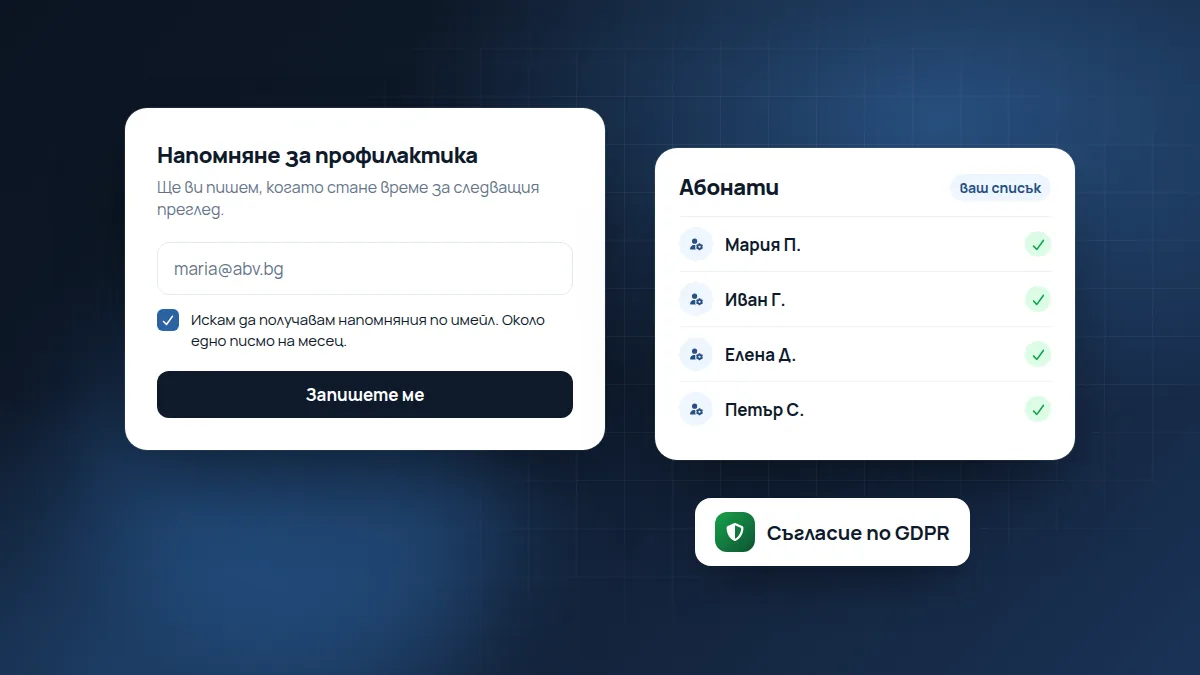
- Ask with a clear reason. “Would you like us to remind you when it’s time for your next check-up?” works better than “Subscribe to our newsletter”.
- Separate consent. Under GDPR, the person must tick for themselves that they want to receive emails. The box can’t be pre-ticked.
- Say what they’ll receive and how often. “About one email a month” is reassuring.
- Easy unsubscribing. Every email contains an unsubscribe link. It is a legal requirement and a sign of respect.
Where to ask
- In the enquiry form on the website: a separate checkbox “I want to receive reminders and offers by email”.
- In person: at payment or when booking the next appointment. Short, spoken, with a note in the list.
- In the email after a purchase or service, if the person has already left you their email for something else, for example for an invoice. Here you must ask for consent separately, you can’t just add them to the list.
- On the website, with a short form at the end of the pages or an unobtrusive pop-up with a useful hook: a guide, a discount on the first visit, a seasonal calendar.
What you shouldn’t do
- Buy email lists. It is illegal under GDPR, and your emails will end up in spam because people don’t know you.
- Add everyone who wrote to you once for a quote to the list. An enquiry is not consent to marketing emails.
- Hide the unsubscribe link or require a password for a person to unsubscribe.
How often to write
Rarely, but with a reason. It’s better to send one useful email a month than three promotional ones a week. People unsubscribe not because you write, but because you write for no reason.
A good rule: for every three useful emails (a tip, a reminder, news), there can be one purely commercial one (an offer, a new product).
Which tool to use
You don’t need anything complicated at the start. Tools such as Mailchimp, Brevo or MailerLite have free plans for small lists and ready-made templates. What matters is:
- that they have automatic unsubscribing and record who agreed and when;
- that you can send from an email on your own domain (info@yourcompany.bg), not from a free mailbox;
- that the domain is set up correctly (SPF, DKIM, DMARC), so that emails don’t end up in spam.
Where to start
Add a consent checkbox to the enquiry form on your website and ask the next ten customers in person. A list of a few dozen people who know you is worth more than thousands of random addresses.
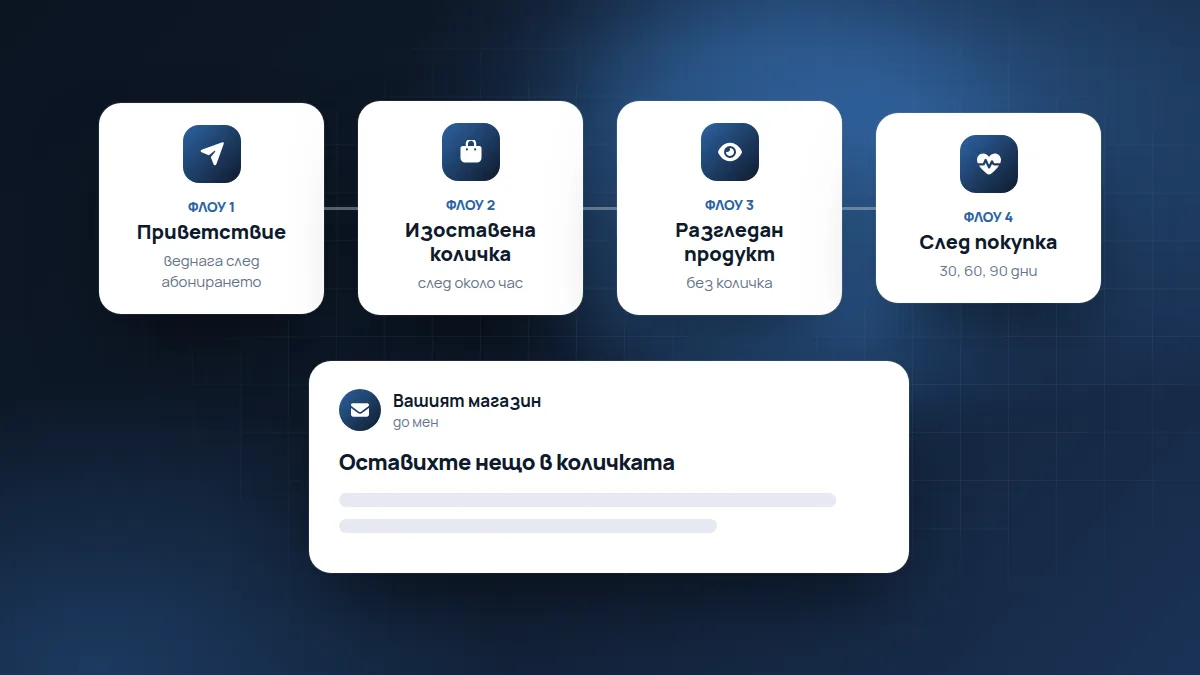
Then think about what to write to them first. A good start is a short welcome email, followed by reminders when it’s time for the next service.
Frequently asked questions
How big does the list have to be to make sense?
There is no minimum. If you have 40 people who have been to see you and want you to remind them, one email can bring back a few customers. That is already worth it.
Can I write to customers who gave me their email for an invoice?
Only about things related to their purchase. For marketing emails you need separate consent. The easiest way is to ask them in the next email related to their purchase.
If you’d like us to set it up for you, see our Email marketing service.
Found this article useful? Share it.