More and more people ask ChatGPT or Gemini “who is a good dentist in Varna?”. What to do so there is information about you for them to answer from.
Until now, when someone was looking for a service, they opened Google and browsed the results. Today more and more people ask an AI assistant directly: ChatGPT, Gemini, Copilot or the AI answers at the very top of Google itself. The assistant doesn’t show ten links, but answers in a few sentences and sometimes names specific businesses.
GEO (Generative Engine Optimization) is the work of making sure assistants have clear and accurate information about your business to answer from.
What it looks like in practice
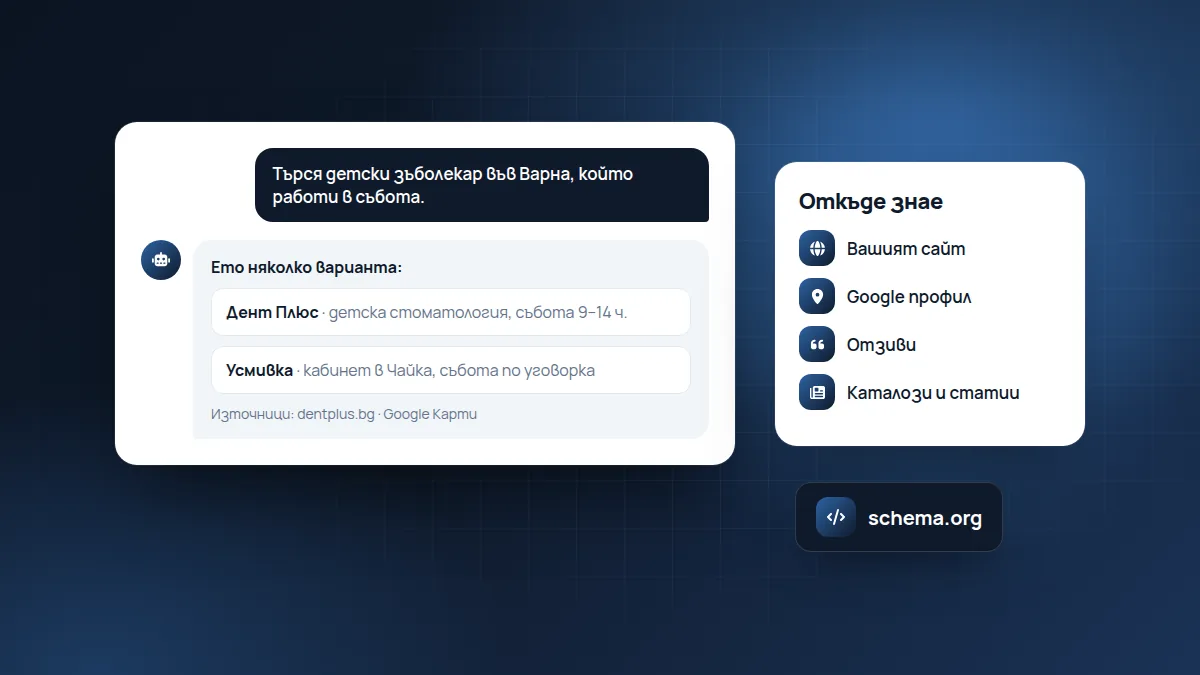
Imagine someone typing into ChatGPT: “I’m looking for a children’s dentist in Varna who works on Saturdays.” The assistant searches the internet, reads several websites and the Google profiles of the practices, and answers with two or three practices and a short reason why.
If nowhere on your website does it say that you work with children and that you’re open on Saturdays, the assistant has no way of knowing. You may be the best-suited practice in the city and still not make it into the answer.
Where AI assistants learn about you
From the same places people do: your website, your Google Business Profile, reviews, directories and articles that mention you. If the information is scattered, contradictory or missing, the assistant has nothing to answer from.
There are two main ways they get to the information:
- From what they have “learned”. The models are trained on a huge amount of text from the internet up to a certain date. If you’ve been written about for years, they may know something.
- From searching in the moment. When a person asks about something current or local, the assistant searches the internet and reads the pages. Here what matters is how your website looks today and whether the assistant’s bot has access to it at all.
GEO and SEO: what’s the difference
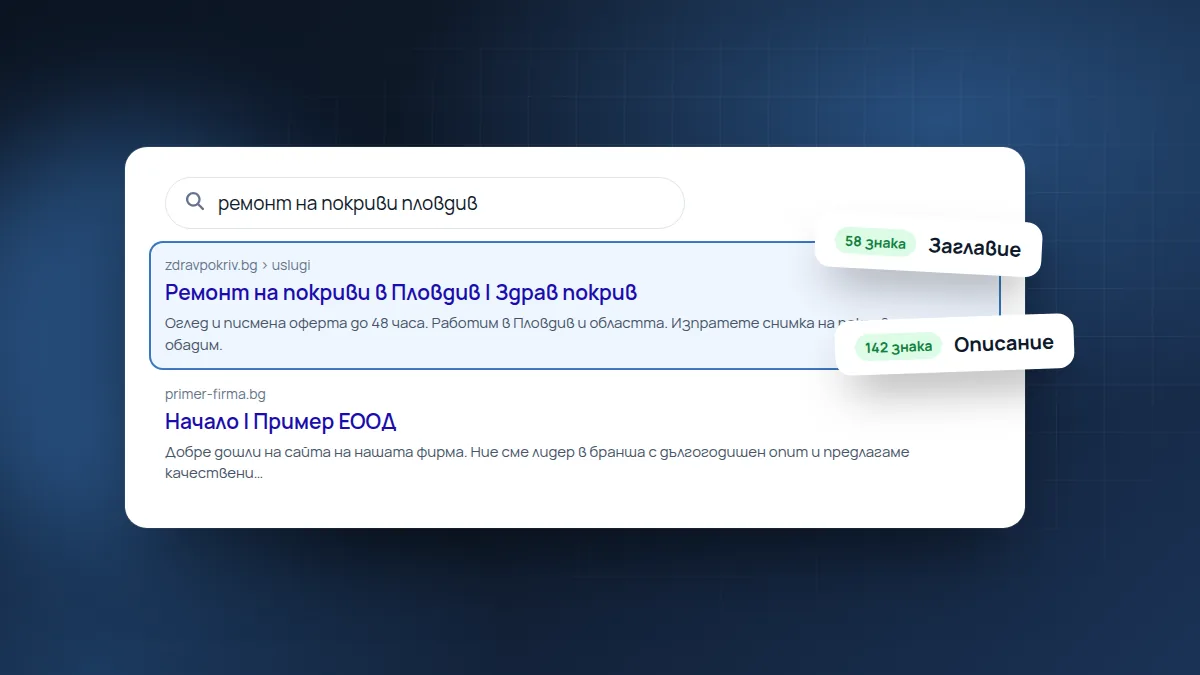
SEO is the work of ranking higher in the list of Google results. GEO is the work of getting cited in the assistant’s answer. In practice the two overlap a lot: a clear, fast, well-structured website with accurate information helps with both.
The difference is in the emphasis. With GEO it matters even more that:
- the information is written as an answer to a question, not as advertising copy;
- it is the same everywhere, so the assistant can trust it;
- it contains concrete facts: prices, timeframes, areas, opening hours.
What helps
- Clear answers on the website. A frequently asked questions page that says directly: “Yes, we work on Saturdays”, “The price of a check-up is…”, “We serve Varna and Aksakovo”.
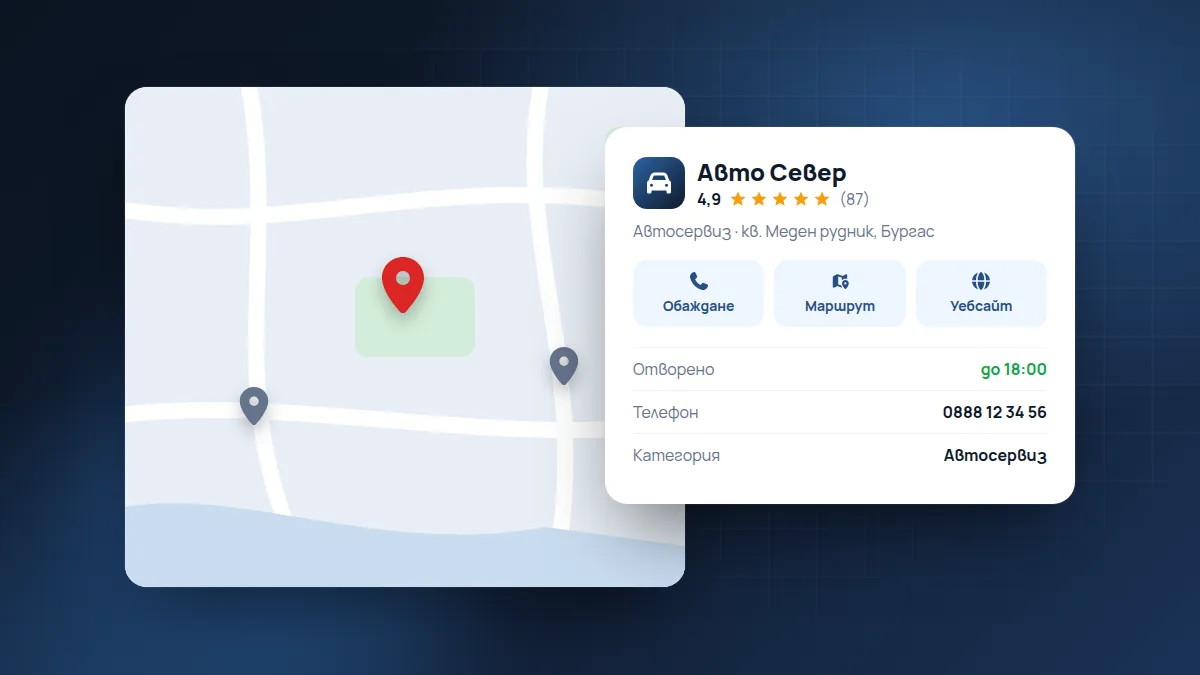
- The same information everywhere. The same name, address, phone number and opening hours on the website, in Google and in directories.
- Structured data. Special code on the website (schema.org) that tells machines what you are: a dental practice, at this address, with these opening hours.
- Reviews with detail. “They replaced my clutch in one day” says much more than five stars with no text.
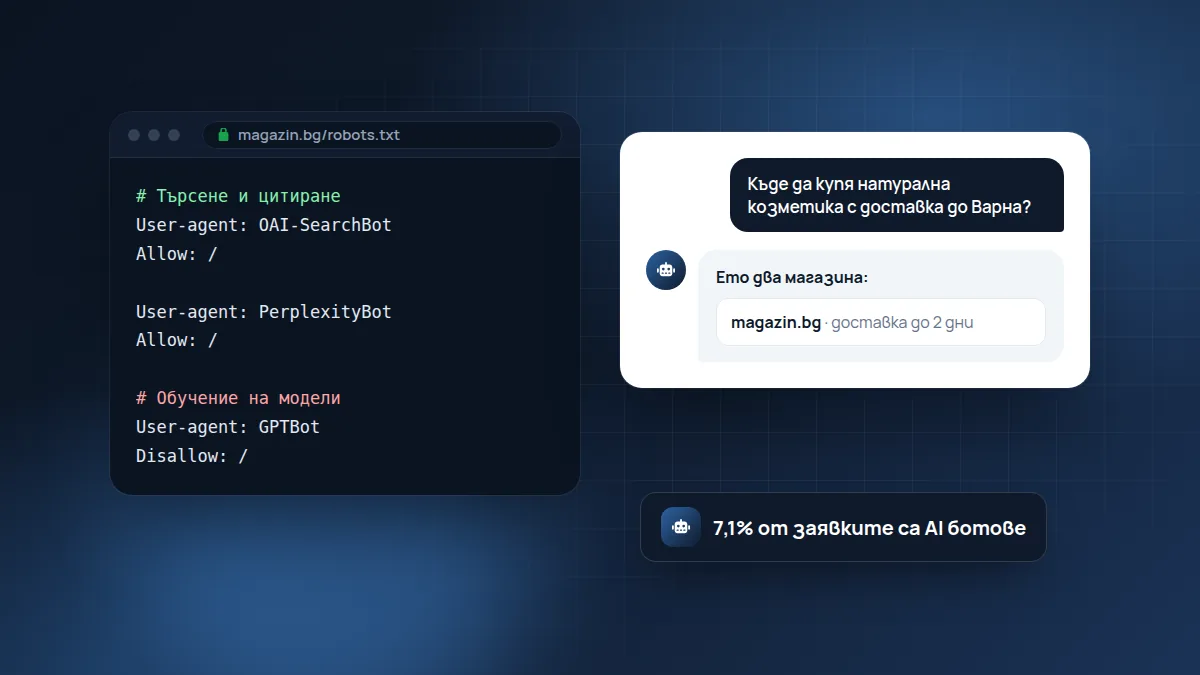
- Access for bots. If your website’s robots.txt file blocks the search bots of ChatGPT, Perplexity or Claude, they can’t read your pages. You can safely block training bots (for example GPTBot), but not the ones that search in order to cite your website.
- Mentions elsewhere. Local websites, directories, articles, partners. The more reliable places say the same thing about you, the more confidently the assistant will repeat it.
How to check what they “know” about you
Open ChatGPT, Gemini or Perplexity and ask the question the way your customer would:
- “Who is a good car repair shop in Burgas for suspension repairs?”
- “What do you know about [business name] in [city]?”
See whether they mention you, whether the information is correct and where they get it from. If the assistant shows sources, click them. You’ll often find an old directory with a wrong phone number or a profile with outdated opening hours.
What we can’t promise
Nobody can promise you that ChatGPT will recommend you, and don’t believe people who do. We can make sure the information about you is available, accurate and easy to understand. The rest is up to the assistant.
Frequently asked questions
Will Google stop being important?
Not any time soon. Most people still search in Google, and Google itself shows AI answers at the top. Work on visibility in Google and visibility in AI assistants goes hand in hand.
Do I need a special file for AI?
Some websites add an llms.txt file with a short description of the business for AI assistants. We have one. It is useful, but not mandatory, and it doesn’t replace clear content on the website itself.
How do I know whether customers come from AI assistants?
In Google Analytics, visits from chatgpt.com, perplexity.ai and gemini.google.com show up as separate sources. For our clients, we report enquiries from them as a separate channel.
If you want to see whether your website has structured data and whether it lets AI bots in, the free check shows that too. And if you’d like us to work on your visibility together, see SEO and AI visibility.
Found this article useful? Share it.